
Andorra is a very small country, but its banking system has drawn attention from around the world. For many years, people and businesses trusted Andorran banks because they offered privacy and flexible financial rules. This helped Andorra handle large amounts of money despite its small size.
That changed after the BPA banking scandal, when international authorities accused one of Andorra’s major banks of serious financial wrongdoing. The case put Andorra’s entire banking system under global scrutiny and forced the country to change how its banks operate.
Today, Andorra’s banks are no longer just a local matter they are part of a much bigger global conversation about money, transparency, and political influence.
Key Features of the Andorran Banking System
- Small but Strong Sector: Andorra’s banking system is made up of five banks, mainly dominated by three major private groups owned by local families.
- High Financial Stability: Andorran banks hold strong capital and liquidity buffers, with solvency above 16% and liquidity levels far higher than global standards.
- No Central Bank: Andorra uses the euro but has no central bank, so banks rely on large internal reserves to manage financial risks.
- Modern Regulation: Since 2015, the system has shifted away from bank secrecy and now follows OECD and international transparency rules.
- Global Reach: Despite a small domestic market, Andorran banks operate internationally through offices and subsidiaries in Europe and the Americas.
Banking for Residents and Non-Residents in Andorra
- Opening an Account: Both residents and non-residents can open bank accounts in Andorra. However, banks usually ask for an in-person visit and carefully check documents to meet strict anti-money-laundering rules.
- Residency Link: Having a local Andorran bank account is an important step when applying for legal residency in the country.
- Available Services: Andorran banks provide everyday banking services such as debit and credit cards, digital banking access, savings accounts, and investment options.
- Currency Used: Andorra uses the Euro (€) as its official currency for all banking and financial transactions.
Overview of Andorra’s Banking System
Andorra’s banking system is small but very strong. It is known for being highly solvent, stable, and well-regulated. The sector is mainly controlled by three private banking groups: Andbank, Creand (Crèdit Andorrà), and MoraBanc. These banks focus on wealth management, investment services, and retail banking, serving both local and international clients.
Despite Andorra’s small size, these banks play an important role in the country’s economy and financial reputation.
Andbank

Andbank is one of the oldest and most well-known banks in Andorra. It has a strong focus on private banking and wealth management, helping individuals and families manage, protect, and grow their assets. Over the years, Andbank has expanded outside Andorra and now operates in several international markets.
The bank is known for combining traditional banking values with modern investment solutions. It serves high-net-worth clients while also offering standard banking services such as savings accounts, loans, and investment products.
Creand (Crèdit Andorrà)
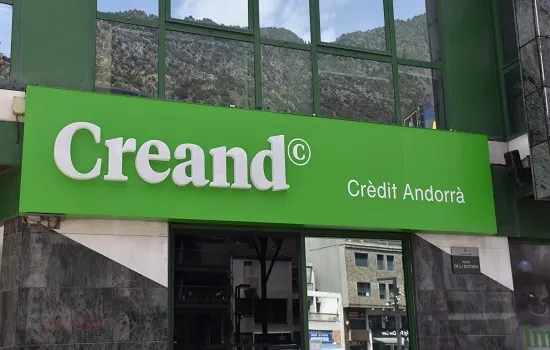
Creand, formerly known as Crèdit Andorrà, is the largest banking group in the country. It plays a key role in retail banking, meaning it serves everyday customers, businesses, and institutions within Andorra. At the same time, Creand has a strong presence in wealth management and investment services.
The bank focuses on long-term stability, innovation, and customer trust. It has also expanded internationally, offering asset management and private banking services in other countries.
MoraBanc

MoraBanc is another major pillar of Andorra’s banking sector. It offers a wide range of services, including personal banking, corporate banking, and investment management. MoraBanc is known for its strong digital banking tools and customer-focused approach.
The bank has also invested heavily in technology and transparency, aligning itself with international financial standards. This has helped MoraBanc build a reputation as a modern and reliable bank in a changing global financial environment.
How the Andorran Banking System Works
Andorra’s banking system is compact but efficient, designed to serve both local needs and international clients. Its structure is simple, stable, and focused on long-term financial security.
Number and Role of Major Banks
Andorra has a small number of banks, with the system mainly led by three major private banking groups. These banks handle most financial activity in the country, including savings, lending, investments, and international banking services. Their size allows for close regulation and careful risk management.
Private Banking vs Retail Banking
Andorran banks operate in two main areas:
- Retail banking serves local residents and businesses, offering everyday services such as current accounts, loans, cards, and online banking.
- Private banking focuses on high-net-worth individuals and international clients, providing wealth management, investment planning, and asset protection services.
This balance allows banks to support the local economy while attracting global capital.
Client Base: Local and International
The client base of Andorran banks is diverse. It includes:
- Local residents and businesses
- European clients, especially from nearby countries
- International investors looking for stable and well-regulated financial services
This mix helps banks reduce dependence on a single market and strengthens the overall system.
Currency Use: Euro Without EU Membership
Although Andorra is not a member of the European Union, it uses the Euro (€) as its official currency. This makes financial transactions easier for European and international clients. However, since Andorra does not have its own central bank, local banks manage risk by keeping high levels of liquidity and capital reserves.
Regulation and Oversight of Banks
Banks are regulated by a mix of central banks, government agencies, and specialized regulators. These bodies work together to keep the financial system stable, protect depositors, and reduce the risk of major bank failures.
Key Regulatory Bodies
- Central Banks: Oversee monetary policy, supervise banks, and manage currency stability (e.g., RBI in India, Federal Reserve in the US).
- Government Agencies: Handle deposit protection and consumer rights (e.g., FDIC in the US, DICGC in India).
- Specialized Regulators: Monitor specific financial sectors such as securities and insurance (e.g., SEBI and IRDAI in India).
Core Functions of Regulation
- Prudential Supervision: Ensures banks hold enough capital and liquidity to stay resilient.
- Licensing: Controls who can operate as a bank through strict approval processes.
- Consumer Protection: Safeguards customer deposits and fair banking practices.
- Risk Control: Limits excessive risk-taking to prevent system-wide crises.
Common Regulatory Tools
- Capital Requirements: Banks must hold funds to absorb losses.
- Liquidity Ratios: Ensure banks can meet short-term obligations.
- Stress Tests: Measure how banks perform under economic pressure.
- AML Rules: Prevent banks from being used for illegal activities.
Primary Andorran Regulators
- AFA (Autoritat Financera Andorrana) – The main financial regulator responsible for supervising banks, financial institutions, and market stability.
- UIFAND (Unitat d’Intel·ligència Financera d’Andorra) – Andorra’s financial intelligence unit, overseeing anti–money laundering (AML) and counter-terrorist financing compliance.
The BPA Crisis Explained: The Scandal That Changed Andorran Banking
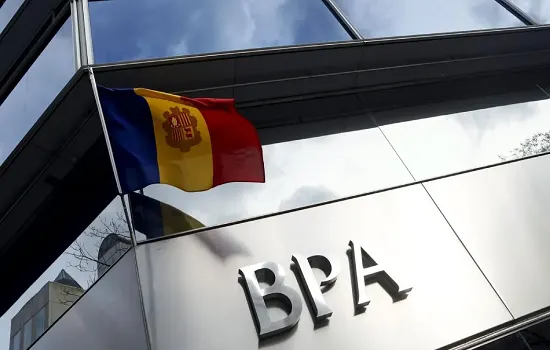
The Banca Privada d’Andorra (BPA) scandal began in 2015 and marked a major turning point for Andorra’s banking system.
International authorities accused BPA of weak anti-money-laundering controls and links to illicit financial activity. The crisis was triggered by a notice from the U.S. FinCEN, which labeled the bank a money-laundering concern and cut it off from the U.S. financial system.
Following this action, Andorran regulators intervened, BPA was shut down, and its operations were dismantled. The scandal caused immediate damage to Andorra’s financial reputation and led to stricter regulations, stronger AML rules, and greater transparency across the entire banking sector.
Reforms After BPA: A System Transformed
The BPA scandal forced Andorra to fundamentally rethink its banking system. In response, the country introduced strict compliance and transparency measures, ensuring that banks adhere to international standards and rigorously monitor client activities.
The era of traditional banking secrecy came to an end, with banks now required to share financial information with foreign regulators and follow anti-money-laundering (AML) protocols.
At the same time, Andorra worked to align its financial system with European Union standards, even though it is not an EU member. These reforms improved regulatory oversight, restored international confidence, and transformed Andorra’s banks into a more transparent, modern, and globally trusted sector.
Is Andorra Still a Banking Safe Haven?
Andorra’s banks have recovered their reputation after the BPA scandal, with strong transparency, compliance, and financial stability.
For investors, the pros include high-quality wealth management, privacy, and a stable economy, while cons include limited market size and stricter regulations compared to the past.
Today, Andorra competes with Switzerland and Luxembourg by offering a secure, well-regulated banking environment with international services, though on a smaller scale, appealing to niche investors seeking discretion and stability.
Frequently Asked Questions (FAQs)
- What was the BPA scandal?
In 2015, BPA was accused by the U.S. FinCEN of money laundering for criminal groups, prompting Andorra to take over the bank. - What happened to BPA’s assets?
The government transferred safe assets to Vall Banc to protect depositors and stabilize the financial sector. - Were BPA executives punished?
Several former BPA executives were convicted in Andorran courts, though the case remains controversial and legally disputed. - Why was the case politically sensitive?
Some say Andorra acted under international pressure, using BPA as a scapegoat, while others argue it was necessary to protect the banking system. - How important is banking to Andorra’s economy?
Banking remains a core pillar, contributing significantly to GDP and attracting international deposits.
Conclusion
The BPA scandal exposed vulnerabilities in Andorra’s banking system but also triggered major reforms. Stronger regulations, improved transparency, and alignment with international standards have restored confidence in the sector. While the case highlighted political and regulatory challenges, it ultimately strengthened Andorra’s banks, making them more resilient and globally trusted.
Stay Informed About Andorra’s Banking Reforms
Want to understand how Andorra rebuilt its banking system after the BPA scandal? Explore detailed analysis, trusted insights, and the latest updates on Andorra’s financial sector with Andorra Facts, your source for clarity in global finance.